
How to Calculate ARV (After Repair Value): A Complete Guide for Real Estate Investors
The After Repair Value (ARV) is one of the most important numbers in real estate investing and wholesaling. It estimates what a property could be worth after completing the necessary repairs and renovations.
Whether you are evaluating a wholesale deal, considering a fix-and-flip project, or comparing investment opportunities, understanding ARV can help you make more informed decisions.
With the EasyLife VA Free ARV Calculator, you can estimate a property’s after-repair value using comparable property sales, property sizes, and adjustments for differences in condition.
In this guide, you’ll learn what ARV means, how to calculate it, how to select comparable properties, and how to avoid common mistakes.
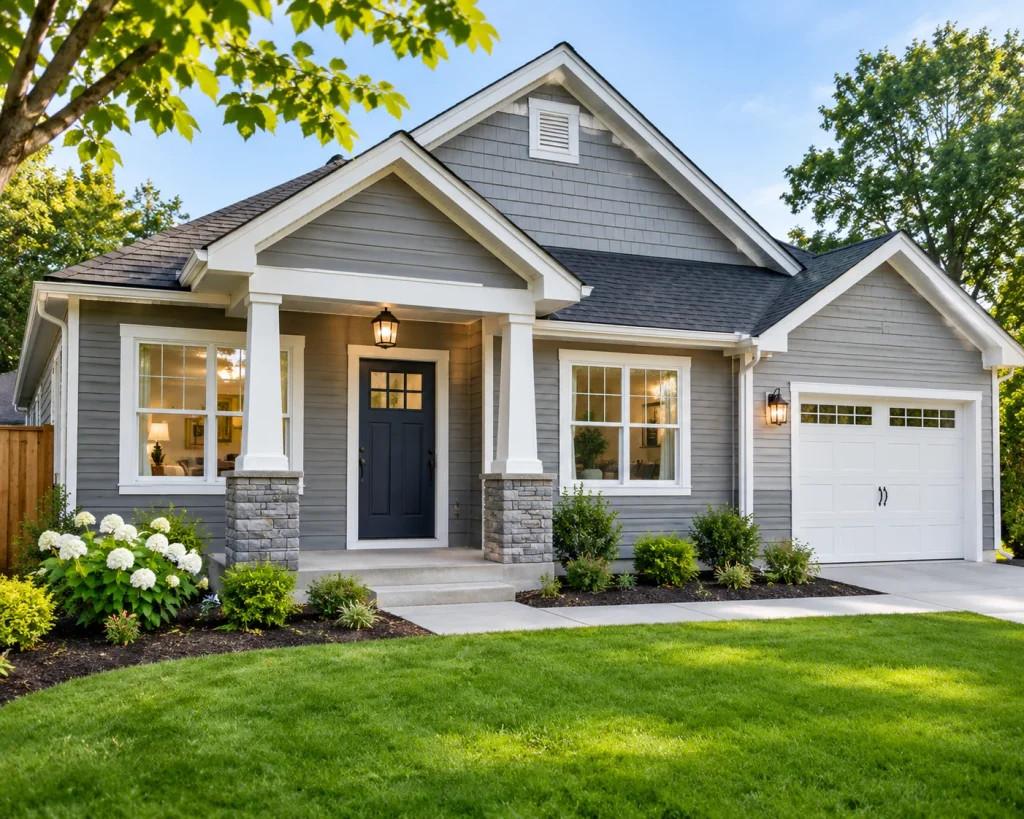
What Is ARV in Real Estate?
ARV stands for After Repair Value. It is the estimated market value of a property after the necessary repairs and renovations have been completed.
For example, imagine an investor finds a house that needs substantial renovation. Similar renovated houses in the same neighborhood have recently sold for approximately $250,000.
If the investor believes the property can achieve a similar value after renovation, its estimated ARV may be around $250,000.
ARV is particularly useful for:
- Real estate wholesalers evaluating potential deals.
- House flippers estimating resale value.
- Real estate investors calculating potential returns.
- Buyers comparing renovation opportunities.
- Investors determining their maximum allowable offer (MAO).
Important: ARV is an estimate, not a guaranteed selling price. Actual resale value depends on market conditions, renovation quality, location, buyer demand, and other factors.
How to Calculate ARV
There are several ways to estimate ARV, but one commonly used approach is to analyze recently sold comparable properties, also known as comps.
The basic principle is to estimate the property’s market value after repairs using relevant comparable sales.
A practical comparable-sales approach involves:
- Identifying recently sold renovated properties.
- Selecting properties similar to the subject property.
- Comparing their sale prices and sizes.
- Adjusting for meaningful differences.
- Calculating an estimated value for the subject property.
Step 1: Identify the Subject Property
Start with the property you are evaluating.
Collect important information, including:
- Property address.
- Square footage.
- Number of bedrooms and bathrooms.
- Property type.
- Lot size.
- Current condition.
- Required repairs and renovations.
Accurate property information is important because your comparable properties need to be reasonably similar.
Step 2: Find Comparable Properties (Comps)
Comparable properties are recently sold properties that are similar to the property you are evaluating.
Look for properties that:
- Are located in the same neighborhood or a similar nearby area.
- Have similar square footage.
- Have a comparable number of bedrooms and bathrooms.
- Share similar property characteristics.
- Have recently sold rather than simply being listed for sale.
- Have a similar renovated condition to the condition you expect to achieve.
Whenever possible, prioritize recent closed sales over active listings or asking prices.
A property listed for $275,000 does not necessarily have a market value of $275,000. The actual closed sale price provides stronger evidence of what buyers have paid.
For additional guidance, see Fannie Mae’s Comparable Sales guidance. This is appraisal guidance, but it provides useful information about selecting comparable properties and evaluating their similarities.
Step 3: Compare Sale Prices and Property Sizes
Once you have identified suitable comps, record their sale prices and square footage.
A useful metric is price per square foot.
Price Per Square Foot = Comparable Sale Price ÷ Comparable Property Size
For example:
| Comparable | Sale price | Size | Price per sq. ft. |
|---|---|---|---|
| Property A | $245,000 | 1,800 sq. ft. | $136.11 |
| Property B | $255,000 | 1,850 sq. ft. | $137.84 |
| Property C | $252,000 | 1,780 sq. ft. | $141.57 |
These figures provide a starting point for comparing the properties. However, price per square foot alone does not account for differences in condition, layout, location, or other important characteristics.
Step 4: Adjust Comparable Sales
Not every comparable property will be identical to your subject property.
You may need to adjust comparable sale prices to account for meaningful differences.
For example:
- If a comparable property has a better kitchen or bathroom than your subject property, you may need to subtract an appropriate amount.
- If a comparable property has an inferior condition or feature, you may need to add an appropriate amount.
- If a property has a significant size or layout difference, consider whether it is truly a suitable comparable before relying on an adjustment.
The purpose is to estimate what each comparable property might have sold for if it had characteristics similar to your subject property.
Adjustment principle:
- Add an adjustment when the comparable property is inferior to the subject property.
- Subtract an adjustment when the comparable property is superior to the subject property.
Adjustments should be supported by market evidence where possible, rather than arbitrary amounts.
You can also review Fannie Mae’s guidance on adjustments to comparable sales for more information about market-supported adjustments.
Step 5: Calculate the Estimated ARV
After adjusting your comparable sales, calculate the estimated value using the adjusted sale prices and property sizes.
For a practical estimate, you can calculate the adjusted price per square foot for each comparable and use the average to estimate the subject property’s value.
Estimated ARV = Average Adjusted Price per Sq. Ft. × Subject Property Size
Let’s walk through a worked example using the same type of inputs displayed in the EasyLife VA ARV Calculator.
ARV Calculation Example
Suppose you are evaluating a property with the following details:
Subject property:
- Property size: 1,820 square feet.
- Estimated condition after renovation: Comparable to the selected renovated properties.
You identify three comparable sales:
| Comparable | Sale price | Size | Adjustment |
|---|---|---|---|
| Comp 1 | $245,000 | 1,800 sq. ft. | $0 |
| Comp 2 | $255,000 | 1,850 sq. ft. | -$3,000 |
| Comp 3 | $252,000 | 1,780 sq. ft. | +$2,000 |
Step 1: Calculate adjusted sale prices
| Comparable | Calculation | Adjusted price |
|---|---|---|
| Comp 1 | $245,000 + $0 | $245,000 |
| Comp 2 | $255,000 – $3,000 | $252,000 |
| Comp 3 | $252,000 + $2,000 | $254,000 |
Step 2: Calculate adjusted price per square foot
- Comp 1: $245,000 ÷ 1,800 = $136.11
- Comp 2: $252,000 ÷ 1,850 = $136.22
- Comp 3: $254,000 ÷ 1,780 = $142.70
Step 3: Calculate the average
($136.11 + $136.22 + $142.70) ÷ 3 = approximately $138.34 per square foot.
Step 4: Estimate ARV
$138.34 × 1,820 = approximately $251,781.
Estimated ARV: $251,781
This is an illustrative calculation using sample numbers. Your calculator may display slightly different results because of its internal rounding and valuation-range calculations.
How to Use the Free EasyLife VA ARV Calculator
You don’t need to calculate every comparable property manually.
The EasyLife VA ARV Calculator lets you enter your subject property’s size, add comparable sales, and adjust their sale prices.
Follow these steps:
- Enter the subject property’s square footage.
- Select your preferred currency.
- Enter the sale price of your first comparable property.
- Enter that property’s square footage.
- Add an adjustment if the comparable differs from your subject property.
- Repeat the process for additional comparable properties.
- Review the estimated ARV and displayed valuation range.
- Copy or print the calculation summary for your records.
The calculator displays:
- Estimated ARV.
- Estimated valuation range.
- Average price per unit of property size.
- Number of comparable sales used.
You can add or remove comparable properties as needed.
Tip: Use reliable, relevant comparable sales. Adding more poor-quality comps does not necessarily make an ARV estimate more accurate.
How to Choose the Right Comparable Properties

Choosing good comps is one of the most important parts of estimating ARV.
Even a well-designed calculator cannot compensate for inaccurate or unsuitable comparable sales.
Consider these factors when researching comps.
1. Location
Start with properties in the same neighborhood whenever possible.
Properties in different neighborhoods may have significantly different values because of school districts, local amenities, accessibility, crime rates, and buyer demand.
Expand your search area only when there are not enough suitable nearby sales.
2. Property Size
Look for comparable properties with similar square footage.
A 1,800-square-foot house may not be directly comparable to a 3,000-square-foot house, even if both have similar bedroom counts.
3. Property Type
Compare similar property types.
For example:
- Single-family homes with single-family homes.
- Condominiums with comparable condominiums.
- Townhouses with similar townhouses.
Different property types can have different buyer markets and valuation characteristics.
4. Number of Bedrooms and Bathrooms
Bedrooms and bathrooms can influence property value.
Try to select properties with similar layouts and bedroom and bathroom counts.
A four-bedroom property may attract a different buyer group than a two-bedroom property.
5. Sale Date
Prioritize recent closed sales.
Real estate markets change, and older sales may not reflect current buyer demand or market conditions.
In a changing market, even a sale from several months ago may require additional consideration.
6. Renovation and Property Condition
Since ARV estimates the value after repairs, look for renovated comparable properties that reflect the condition you realistically expect your subject property to achieve.
For example, if you plan a basic renovation, do not base your ARV entirely on luxury properties with premium finishes.
7. Special Features
Pay attention to features that can influence property value, including:
- Garages and parking.
- Basements.
- Swimming pools.
- Lot sizes.
- Outdoor living spaces.
- Updated kitchens and bathrooms.
- Additional living areas.
Use adjustments only when there is a reasonable basis for them.
Common ARV Calculation Mistakes to Avoid
A small mistake in estimating ARV can significantly affect an investment decision.
Here are some common mistakes real estate investors should avoid.
1. Using Asking Prices Instead of Sold Prices
An asking price represents what a seller wants to receive, not necessarily what a buyer will pay.
Whenever possible, use verified closed sales.
2. Choosing Comps from Different Neighborhoods
A property a few streets away may belong to a different market or neighborhood.
Avoid selecting comps based only on proximity without considering location differences.
3. Ignoring Property Condition
A renovated property and a property requiring extensive repairs should not automatically be treated as equivalent.
Consider the expected finished condition when selecting comps.
4. Using Outdated Comparable Sales
Older transactions may not represent current market conditions.
Prioritize recent sales and account for market changes when necessary.
5. Relying on Only One Comparable
A single sale can be misleading.
Where possible, use multiple relevant comparable properties to understand the market more reliably.
6. Making Unsupported Adjustments
Do not add or subtract arbitrary amounts simply to achieve a desired ARV.
Adjustments should reflect meaningful differences and, ideally, be supported by local market evidence.
7. Confusing ARV with Profit
ARV is the estimated value after renovation. It is not the investor’s expected profit.
You must also account for acquisition costs, repairs, holding costs, selling costs, financing, and other expenses.
How ARV Helps Real Estate Wholesalers Calculate MAO

After estimating ARV, wholesalers can use it to evaluate how much they should offer for a property.
This is where the Maximum Allowable Offer (MAO) becomes important.
A commonly used simplified formula is:
MAO = ARV × Investor Percentage – Repair Costs – Assignment Fee
For example:
| Item | Amount |
|---|---|
| Estimated ARV | $250,000 |
| Investor percentage | 70% |
| Maximum value at 70% | $175,000 |
| Estimated repairs | $30,000 |
| Assignment fee | $10,000 |
| Simplified MAO | $135,000 |
This is an illustrative rule-of-thumb calculation, not a universal investment formula. The appropriate percentage and deductions vary by market, property, financing, buyer requirements, and transaction costs.
Continue your analysis with the EasyLife VA Wholesale Deal Analysis Tool.
You can also explore the EasyLife VA Real Estate Tools directory to find additional calculators for evaluating wholesale deals, including MAO analysis.
Frequently Asked Questions About ARV
What does ARV mean in real estate?
ARV stands for After Repair Value. It is the estimated market value of a property after the necessary repairs and renovations have been completed.
How do you calculate ARV?
A common approach is to research recently sold comparable properties, adjust their sale prices for relevant differences, and use the adjusted comparable values to estimate the subject property’s value.
What is a good number of comps for calculating ARV?
Three to five suitable comparable sales can provide a useful starting point, provided they are genuinely similar and supported by reliable market data. More comps are not automatically better.
How far away should comparable properties be?
Start with the same neighborhood or immediate surrounding area. The appropriate distance depends on the local market, neighborhood boundaries, property density, and availability of comparable sales.
Should I use renovated or unrenovated properties for ARV?
Generally, use renovated properties that reflect the condition you expect your subject property to have after repairs. Unrenovated sales may be useful for other parts of your analysis, but they do not directly establish the value of a fully renovated property.
Is ARV the same as market value?
Not exactly. ARV is an estimate of the property’s potential market value after repairs. Actual market value depends on the property’s condition, location, market conditions, and buyer demand at the time of sale.
Can I calculate ARV without a real estate agent?
Yes. Investors can research public property records and comparable sales themselves. However, accurate valuation requires reliable data and a good understanding of local market conditions. An experienced real estate professional or appraiser may help when additional valuation expertise is needed.
How accurate is an online ARV calculator?
An online ARV calculator is only as reliable as the information entered. Accurate property details, suitable comparable sales, and reasonable adjustments are essential. Treat the result as an estimate rather than a guaranteed sale price.
Does a higher ARV mean a better wholesale deal?
Not necessarily. A higher ARV does not automatically mean a profitable investment. Acquisition price, repair costs, transaction expenses, assignment fees, and the end buyer’s requirements all matter.
What is the difference between ARV and MAO?
ARV estimates what a property may be worth after repairs. MAO estimates the maximum amount an investor should offer based on ARV, repair expenses, assignment fees, and other investment assumptions.
Continue Learning About Real Estate Wholesaling
Understanding ARV is only one part of evaluating a wholesale real estate deal.
Explore these additional EasyLife VA resources:
- How to Analyze a Wholesale Real Estate Deal: A Step-by-Step Guide
- Explore Free Real Estate Calculators and Tools
- Explore EasyLife VA’s Real Estate Virtual Assistant Services
Final Thoughts
Understanding After Repair Value is an important skill for real estate wholesalers and investors.
By researching reliable comparable sales, comparing property sizes and conditions, and making reasonable adjustments, you can develop a more informed estimate of a property’s potential value.
Use the EasyLife VA Free ARV Calculator to organize your comparable sales and estimate ARV. Then continue your evaluation with the Wholesale Deal Analysis Tool and other real estate calculators.
The better your research and assumptions, the more useful your investment analysis will be.
Start with reliable data, calculate carefully, and always verify your numbers before making an offer.
Disclaimer: This calculator and guide are provided for educational and informational purposes only. They do not constitute an appraisal, financial advice, or a guarantee of market value. Verify property records and comparable sales independently, and consult qualified local professionals when appropriate.